Every second of every day, your cells are under attack from free radicals—unstable molecules that damage DNA, proteins, and cell membranes. This process, called oxidative stress, is the underlying mechanism of aging and virtually every chronic disease. The good news? Your body has a sophisticated antioxidant defense system—and you can supercharge it naturally.
Understanding Free Radicals and Oxidative Stress
What Are Free Radicals?
Free radicals are molecules with unpaired electrons. Because electrons prefer to be in pairs, free radicals are highly unstable and reactive. They steal electrons from other molecules (proteins, fats, DNA) to stabilize themselves, creating a chain reaction of damage called a "free radical cascade."
Sources of Free Radicals
Internal Sources:
- Normal metabolism (mitochondria produce free radicals during energy production)
- Immune system activity (white blood cells use free radicals to kill pathogens)
- Exercise (temporary increase in free radicals)
- Inflammation
- Stress hormones
External Sources:
- Air pollution
- Cigarette smoke
- UV radiation (sunlight)
- Industrial chemicals and pesticides
- Fried foods and trans fats
- Excess alcohol
- Radiation (X-rays, CT scans)
- Heavy metals
Types of Free Radicals (ROS & RNS)
Reactive Oxygen Species (ROS):
- Superoxide radical (O₂•⁻)
- Hydroxyl radical (•OH) - most damaging
- Hydrogen peroxide (H₂O₂)
- Singlet oxygen (¹O₂)
Reactive Nitrogen Species (RNS):
- Nitric oxide (NO•)
- Peroxynitrite (ONOO⁻)
What Is Oxidative Stress?
Oxidative stress occurs when free radical production exceeds your body's antioxidant defenses. This imbalance leads to:
- DNA damage: Mutations, cancer risk
- Lipid peroxidation: Cell membrane damage, atherosclerosis
- Protein oxidation: Enzyme dysfunction, tissue damage
- Telomere shortening: Accelerated aging
Diseases Linked to Oxidative Stress
- Cardiovascular disease (atherosclerosis, heart attack, stroke)
- Cancer (all types)
- Neurodegenerative diseases (Alzheimer's, Parkinson's, ALS)
- Diabetes and metabolic syndrome
- Autoimmune conditions
- Cataracts and macular degeneration
- Chronic inflammation
- Premature aging
Your Body's Antioxidant Defense System
Endogenous (Internal) Antioxidants
Your body produces powerful antioxidants:
1. Glutathione (GSH)
- "Master antioxidant"
- Neutralizes free radicals and recycles other antioxidants
- Required for Phase 2 liver detoxification
- Declines with age, stress, poor diet
2. Superoxide Dismutase (SOD)
- Converts superoxide radicals into hydrogen peroxide
- Requires copper, zinc, manganese
3. Catalase
- Breaks down hydrogen peroxide into water and oxygen
- Requires iron
4. Glutathione Peroxidase
- Works with glutathione to neutralize hydrogen peroxide
- Requires selenium
5. Coenzyme Q10 (CoQ10)
- Mitochondrial antioxidant
- Essential for energy production
- Declines significantly with age (50% reduction by age 40)
6. Alpha-Lipoic Acid
- "Universal antioxidant" (works in water and fat)
- Regenerates vitamins C and E
- Chelates heavy metals
Exogenous (Dietary) Antioxidants
You must obtain these from food and supplements:
Vitamins:
- Vitamin C (ascorbic acid)
- Vitamin E (tocopherols and tocotrienols)
- Vitamin A and carotenoids (beta-carotene, lycopene, lutein)
Minerals:
- Selenium
- Zinc
- Copper
- Manganese
Phytochemicals (plant compounds):
- Polyphenols (flavonoids, anthocyanins, resveratrol)
- Carotenoids
- Sulfur compounds (allicin in garlic, sulforaphane in broccoli)
- Chlorophyll
How Antioxidants Work
Direct Neutralization:
- Donate electrons to free radicals without becoming unstable themselves
- Example: Vitamin C donates electron to free radical, neutralizing it
Enzymatic Activity:
- Act as cofactors for antioxidant enzymes
- Example: Selenium is required for glutathione peroxidase
Chelation:
- Bind to pro-oxidant metals (iron, copper) preventing free radical formation
- Example: Alpha-lipoic acid chelates heavy metals
Antioxidant Network:
- Antioxidants work together, regenerating each other
- Example: Vitamin C regenerates vitamin E, glutathione regenerates vitamin C
Testing for Oxidative Stress
Laboratory Tests
8-OHdG (8-hydroxy-2-deoxyguanosine)
- Measures DNA damage
- Urine test
- Elevated = high oxidative stress
F2-Isoprostanes
- Measures lipid peroxidation
- Urine or blood test
- Marker of cardiovascular disease risk
Malondialdehyde (MDA)
- Byproduct of lipid peroxidation
- Blood test
Glutathione (GSH) and GSSG (oxidized glutathione)
- GSH:GSSG ratio indicates oxidative status
- Lower ratio = more oxidative stress
Markers of Antioxidant Status:
- Total antioxidant capacity (TAC)
- Vitamin C levels
- Vitamin E levels
- Selenium levels
- CoQ10 levels
The Antioxidant-Rich Diet
Top Antioxidant Foods (ORAC Values)
ORAC (Oxygen Radical Absorbance Capacity) measures antioxidant capacity. Higher = better.
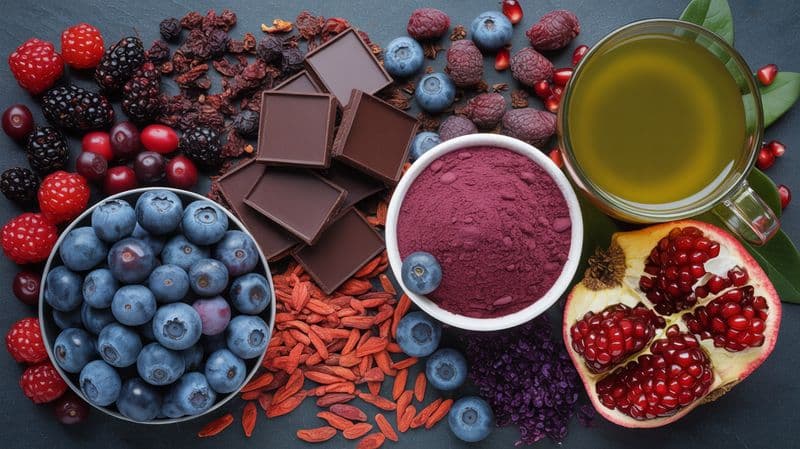
Top 20 Antioxidant Foods:
- Cloves: 314,446 per 100g
- Sumac: 312,400
- Cinnamon: 267,536
- Oregano (dried): 200,129
- Turmeric: 159,277
- Açai berries: 102,700
- Cocoa powder: 80,933
- Pecans: 17,940
- Elderberries: 14,697
- Blueberries (wild): 14,045
- Cranberries: 9,584
- Blackberries: 5,905
- Raspberries: 5,065
- Goji berries: 4,310
- Strawberries: 4,302
- Dark chocolate (70%+): 20,816
- Artichokes: 9,416
- Kidney beans: 8,459
- Black beans: 8,494
- Green tea (brewed): 1,253 per 100ml
Antioxidants by Color (Rainbow Principle)
Red:
- Lycopene: Tomatoes, watermelon, pink grapefruit
- Anthocyanins: Strawberries, raspberries, cherries
- Benefits: Prostate health, heart health, anti-cancer
Orange/Yellow:
- Beta-carotene: Carrots, sweet potatoes, butternut squash
- Vitamin C: Oranges, peppers, pineapple
- Benefits: Eye health, immune function, skin health
Green:
- Chlorophyll: Dark leafy greens, spirulina, chlorella
- Lutein & zeaxanthin: Kale, spinach, collards
- Sulforaphane: Broccoli, Brussels sprouts
- Benefits: Detoxification, eye health, anti-cancer
Blue/Purple:
- Anthocyanins: Blueberries, blackberries, purple cabbage, eggplant
- Resveratrol: Grapes, red wine
- Benefits: Brain health, anti-aging, cardiovascular health
White/Tan:
- Allicin: Garlic, onions
- Quercetin: Onions, apples, capers
- EGCG: White tea
- Benefits: Immune support, anti-inflammatory, antimicrobial
Daily Antioxidant Food Targets
Berries: 1-2 cups daily (fresh or frozen)
- Blueberries, blackberries, raspberries, strawberries
- Highest ORAC values of common fruits
- Rich in anthocyanins for brain health
Leafy Greens: 2-3 cups daily
- Kale, spinach, Swiss chard, collards
- Rich in lutein, zeaxanthin, chlorophyll
Colorful Vegetables: 5-7 servings daily
- Aim for rainbow of colors
- Include cruciferous vegetables daily
Herbs & Spices: Use liberally
- Turmeric (with black pepper)
- Cinnamon
- Oregano
- Ginger
- Garlic
Green Tea: 2-3 cups daily
- Rich in EGCG (epigallocatechin gallate)
- 137x more antioxidants than vitamin C (per serving)
Dark Chocolate: 1-2 oz daily (70%+ cacao)
- Rich in flavonols
- Improves blood flow and cognitive function
Nuts & Seeds: 1/4 cup daily
- Pecans, walnuts (highest antioxidants)
- Provide vitamin E, selenium
Powerful Antioxidant Supplements
1. Glutathione Boosters
N-Acetyl Cysteine (NAC)
- Dosage: 600-1200mg daily
- Why: Precursor to glutathione
- Evidence: Increases intracellular glutathione by 30-50%
Liposomal Glutathione
- Dosage: 500-1000mg daily
- Why: Bypasses digestive breakdown
- Best for: Direct glutathione supplementation
Alpha-Lipoic Acid (ALA)
- Dosage: 300-600mg daily
- Why: Regenerates glutathione, chelates metals
- Evidence: Improves neuropathy, supports liver health
2. Vitamin C
Dosage: 2000-5000mg daily (split doses)
Why: Powerful water-soluble antioxidant, regenerates vitamin E
Best Forms:
- Ascorbic acid (most common)
- Sodium ascorbate (buffered, gentler on stomach)
- Liposomal vitamin C (best absorption)
Clinical Evidence:
- Reduces duration and severity of colds
- Supports collagen production
- Protects against cardiovascular disease
3. Vitamin E
Dosage: 400 IU daily
Why: Lipid-soluble antioxidant, protects cell membranes
Critical: Use mixed tocopherols (alpha, beta, gamma, delta), not just alpha
Food sources: Sunflower seeds, almonds, hazelnuts, avocado
4. Selenium
Dosage: 200mcg daily
Why: Required for glutathione peroxidase enzyme
Food source: 2-3 Brazil nuts daily (provides 200-400mcg)
Caution: Don't exceed 400mcg daily (toxicity)
5. Coenzyme Q10 (CoQ10)
Dosage: 100-300mg daily (ubiquinol form preferred)
Why: Mitochondrial antioxidant, essential for energy production
Especially important if:
- Over age 40 (natural production declines)
- Taking statins (statins deplete CoQ10)
- Heart disease or high blood pressure
- Chronic fatigue
Clinical Evidence:
- Improves heart function
- Reduces migraine frequency
- Supports energy production
6. Resveratrol
Dosage: 250-500mg daily
Why: Activates longevity genes (sirtuins), anti-aging effects
Food sources: Red wine, grapes, peanuts, berries
Evidence: Cardiovascular protection, anti-cancer properties
7. Curcumin (from Turmeric)
Dosage: 500-2000mg daily (with black pepper or enhanced absorption)
Why: Powerful polyphenol, anti-inflammatory
Evidence: 10,000+ published studies on benefits
8. Astaxanthin
Dosage: 4-12mg daily
Why: Most powerful carotenoid, 6000x stronger than vitamin C
Benefits:
- Eye health
- Skin protection (internal sunscreen)
- Reduces exercise-induced oxidative stress
- Anti-aging
9. EGCG (Green Tea Extract)
Dosage: 400-800mg daily (or drink 3-4 cups green tea)
Why: Powerful catechin, activates antioxidant pathways
Evidence: Anti-cancer, metabolic health, brain protection
10. Pterostilbene
Dosage: 50-200mg daily
Why: Similar to resveratrol but better absorbed
Benefits: Cognitive function, blood sugar control, longevity
Lifestyle Strategies to Boost Antioxidants
1. Exercise (The Right Amount)
Moderate exercise increases antioxidant defenses:
- Upregulates SOD, catalase, glutathione peroxidase
- Improves mitochondrial function
- Activates Nrf2 pathway (master antioxidant regulator)
Excessive exercise increases oxidative stress:
- Overtraining depletes antioxidants
- Increases free radical production
- Can cause chronic inflammation
Optimal approach:
- 30-45 minutes moderate intensity, 5x weekly
- Strength training 2-3x weekly
- Adequate recovery between sessions
2. Activate Nrf2 Pathway
Nrf2 is a transcription factor that activates your body's antioxidant genes. When activated, it increases production of:
- Glutathione
- SOD
- Catalase
- Glutathione peroxidase
How to Activate Nrf2:
- Sulforaphane: Broccoli sprouts (most potent), cruciferous vegetables
- Curcumin: Turmeric
- EGCG: Green tea
- Resveratrol: Grapes, berries
- Exercise: Moderate intensity
- Intermittent fasting: Activates cellular stress response
- Cold exposure: Brief cold showers, ice baths
3. Sleep
Sleep is when your body clears oxidative damage and regenerates antioxidants:
- Goal: 7-9 hours nightly
- Timing: Melatonin (sleep hormone) is also a powerful antioxidant
- Dark room: Light suppresses melatonin production
- Consistency: Go to bed and wake at same time
4. Stress Management
Chronic stress depletes antioxidants:
- Increases cortisol → increases free radicals
- Depletes glutathione
- Impairs antioxidant enzyme activity
Effective stress reducers:
- Meditation (20 minutes daily)
- Yoga
- Deep breathing
- Nature exposure
- Social connection
5. Avoid Pro-Oxidant Exposures
Minimize:
- Cigarette smoke (avoid or quit)
- Excessive alcohol
- Fried foods and trans fats
- Charred/grilled meats (AGEs)
- Environmental pollution
- Excessive sun exposure (use natural sunscreen)
6. Intermittent Fasting
Fasting activates autophagy and increases antioxidant defenses:
- 16:8 method: Fast 16 hours, eat within 8-hour window
- Benefits: Increases glutathione, activates Nrf2, clears damaged cells
- Start gradually: Begin with 12-hour overnight fast
The 30-Day Antioxidant Optimization Protocol
Week 1: Foundation
Diet: Add 1 cup berries daily, 2 cups leafy greens
Supplements: Start vitamin C (2000mg), selenium (200mcg)
Lifestyle: 20-minute walk daily, 10-minute meditation
Week 2: Build
Diet: Increase vegetables to 7 servings, add green tea (2 cups)
Supplements: Add NAC (600mg), CoQ10 (100mg)
Lifestyle: Add 2 strength training sessions
Week 3: Optimize
Diet: Focus on colorful variety, add turmeric to meals
Supplements: Add curcumin (1000mg), ALA (300mg)
Lifestyle: Cold shower exposure, improve sleep hygiene
Week 4: Sustain
Diet: Maintain antioxidant-rich eating (80/20 rule)
Supplements: Continue regimen, assess which work best
Lifestyle: Establish sustainable routine
Testing Your Progress
Subjective Markers:
- Increased energy
- Improved skin appearance
- Better exercise recovery
- Fewer colds/infections
- Improved mental clarity
Objective Testing (3-6 months):
- Repeat oxidative stress markers
- Glutathione levels
- Antioxidant capacity
- Inflammatory markers (hs-CRP)
Key Takeaways
- Free radicals cause oxidative stress—the root of aging and disease
- Your body has endogenous antioxidants (glutathione, SOD, catalase)
- Diet provides exogenous antioxidants (vitamins, minerals, phytochemicals)
- Eat the rainbow—different colors provide different antioxidants
- Berries are the most antioxidant-rich common fruit
- Key supplements: NAC, glutathione, vitamin C, CoQ10, curcumin
- Activate Nrf2 pathway to upregulate your own antioxidant production
- Moderate exercise increases antioxidants; excessive exercise depletes them
- Lifestyle matters: sleep, stress management, avoiding toxins
- Antioxidant network—nutrients work together synergistically
References
- Lobo, V., et al. (2010). Free radicals, antioxidants and functional foods. Pharmacognosy Reviews, 4(8), 118.
- Sies, H., et al. (2017). Defining roles of specific reactive oxygen species. Nature Reviews Molecular Cell Biology, 18(12), 731-737.
- Carlsen, M. H., et al. (2010). The total antioxidant content of more than 3100 foods. Nutrition Journal, 9(1), 3.
- Ma, Q. (2013). Role of Nrf2 in oxidative stress and toxicity. Annual Review of Pharmacology and Toxicology, 53, 401-426.
- Pisoschi, A. M., & Pop, A. (2015). The role of antioxidants in the chemistry of oxidative stress. European Journal of Medicinal Chemistry, 97, 55-74.