Do you feel exhausted no matter how much you sleep? Do you get winded going up stairs? You might be among the 2 billion people worldwide with iron deficiency—the most common nutritional deficiency globally.
Iron deficiency is especially prevalent in women, vegetarians, and athletes. The good news? With the right approach, you can replenish your iron stores and reclaim your energy.
Understanding Iron Deficiency
Why Iron Matters
Iron is essential for:
- Oxygen transport: Hemoglobin in red blood cells carries oxygen throughout your body
- Energy production: Required for ATP synthesis in mitochondria
- Immune function: Supports white blood cell production
- Cognitive function: Brain uses 20% of body's oxygen
- Temperature regulation: Helps maintain body temperature
- Exercise performance: Delivers oxygen to working muscles
Bottom Line: Without adequate iron, every cell in your body suffers.
Stages of Iron Deficiency
Stage 1: Iron Depletion
- Iron stores (ferritin) dropping
- No symptoms yet
- Lab: Ferritin <30 ng/mL
Stage 2: Iron Deficiency
- Insufficient iron for red blood cell production
- Mild symptoms begin
- Lab: Ferritin <20 ng/mL, normal hemoglobin
Stage 3: Iron Deficiency Anemia
- Can't produce enough hemoglobin
- Significant symptoms
- Lab: Low hemoglobin, low ferritin
Key Insight: Most doctors only test for Stage 3 (anemia), missing Stages 1-2 where you already feel terrible!
Signs & Symptoms
Common Symptoms
- Fatigue: Overwhelming tiredness not improved by rest
- Weakness: Difficulty with physical activities
- Shortness of breath: Especially during exercise
- Pale skin, nails, and gums
- Cold hands and feet
- Dizziness or lightheadedness
- Fast or irregular heartbeat
Less Obvious Signs
- Brain fog: Poor concentration, memory issues
- Mood changes: Irritability, anxiety, depression
- Restless leg syndrome
- Hair loss: Increased shedding
- Brittle nails: May become spoon-shaped (koilonychia)
- Frequent infections: Weakened immunity
- Pica: Craving ice, dirt, starch (severe cases)
- Sore or swollen tongue
Who's At Risk?
Women:
- Menstruation: lose 1mg iron daily during period
- Pregnancy: need 27mg daily vs. 18mg normally
- Childbirth: blood loss
- Breastfeeding: 9-10mg daily needed
Dietary:
- Vegetarians/vegans: plant iron poorly absorbed
- Low calorie diets
- Eating disorders
Medical:
- GI conditions: celiac, IBD, gastritis
- Recent surgery
- Blood donors (frequent)
- Heavy athletes: increased losses through sweat, GI bleeding
- H. pylori infection
Age:
- Infants and toddlers: rapid growth
- Teenage girls: menstruation + growth
- Elderly: poor absorption, medications
Testing: Know Your Numbers
Essential Tests
1. Ferritin
- Measures iron stores
- Most important test for deficiency
Optimal Ranges:
- Women: 50-100 ng/mL
- Men: 100-200 ng/mL
- Athletes: 50-100 ng/mL minimum
Note: Standard lab range is 12-150 ng/mL, but you'll feel terrible below 50!
2. Complete Blood Count (CBC)
- Hemoglobin: oxygen-carrying protein
- Hematocrit: % of red blood cells
- MCV: red blood cell size
3. TIBC & Transferrin Saturation
- Shows how much iron blood can carry
- Low saturation + high TIBC = iron deficiency
4. Additional Tests (if low ferritin):
- Celiac screening
- H. pylori test
- Inflammatory markers (CRP)
- B12 and folate
Interpreting Results
Iron Deficiency (non-anemic):
- Ferritin: <30 ng/mL
- Hemoglobin: Normal
- Transferrin saturation: <20%
Iron Deficiency Anemia:
- Ferritin: <15 ng/mL
- Hemoglobin: <12 g/dL (women), <13 g/dL (men)
- MCV: <80 fL (small red blood cells)
Dietary Iron: The Foundation
Types of Iron
Heme Iron (from animals):
- 15-35% absorbed
- Not affected by other foods
- Best sources: meat, poultry, fish
Non-Heme Iron (from plants):
- 2-20% absorbed
- Absorption affected by enhancers/inhibitors
- Sources: legumes, grains, vegetables
Top Iron-Rich Foods
Animal Sources (Heme Iron):
- Beef liver: 5mg per 3 oz (33% DV)
- Oysters: 8mg per 3 oz (44% DV)
- Beef: 2-3mg per 3 oz (15% DV)
- Sardines: 2.5mg per 3 oz (14% DV)
- Turkey (dark meat): 2mg per 3 oz (11% DV)
- Chicken (dark meat): 1.1mg per 3 oz (6% DV)
Plant Sources (Non-Heme Iron):
- Lentils (cooked): 3.3mg per 1/2 cup (18% DV)
- Tofu (firm): 3.4mg per 1/2 cup (19% DV)
- Spinach (cooked): 3.2mg per 1/2 cup (18% DV)
- Kidney beans: 2.6mg per 1/2 cup (14% DV)
- Chickpeas: 2.4mg per 1/2 cup (13% DV)
- Pumpkin seeds: 2.5mg per oz (14% DV)
- Quinoa (cooked): 1.5mg per 1/2 cup (8% DV)
- Dark chocolate (70%+): 3.3mg per oz (18% DV)
Fortified Foods:
- Breakfast cereals: 18mg per serving (100% DV)
- Bread: 1-2mg per slice
Maximizing Iron Absorption
Absorption Enhancers:
Vitamin C (Increases absorption 3-4x):
- Pair iron-rich foods with:
- Citrus fruits
- Bell peppers
- Strawberries
- Tomatoes
- Broccoli
Example Combinations:
- Spinach salad with strawberries and lemon dressing
- Black beans with salsa
- Fortified cereal with orange juice
- Iron supplement with 250mg vitamin C
Other Enhancers:
- Meat/poultry/fish: "MFP factor" enhances non-heme iron
- Vitamin A: supports iron metabolism
- Beta-carotene: found in sweet potatoes, carrots, squash
Absorption Inhibitors (Avoid with iron):
Calcium:
- Blocks both heme and non-heme iron
- Separate calcium supplements and dairy by 2+ hours from iron
Tannins:
- Tea: especially black and green tea
- Coffee
- Red wine
- Wait 1-2 hours after meals to drink
Phytates:
- Found in whole grains, legumes, nuts
- Soaking, sprouting, fermenting reduces phytates
- Don't eliminate these foods—just pair with vitamin C
Oxalates:
- Spinach, Swiss chard, beet greens
- Cook to reduce oxalates
- Still nutritious—just not best iron source
Polyphenols:
- Found in tea, coffee, cocoa, some spices
- Limit around meal times
Iron Supplementation
When to Supplement
Consider supplements if:
- Ferritin <50 ng/mL (women) or <100 ng/mL (men)
- Diagnosed with IDA
- Can't meet needs through diet alone
- Menstruating women with symptoms
- Pregnancy or trying to conceive
- Vegetarian/vegan
Types of Iron Supplements
Ferrous Sulfate
- Most common, inexpensive
- 20% elemental iron
- Typical dose: 325mg (65mg elemental)
- Constipation common
Ferrous Gluconate
- 12% elemental iron
- Gentler on stomach
- Less constipation
- May need higher dose
Ferrous Fumarate
- 33% elemental iron
- More constipating
- Good for severe deficiency
Iron Bisglycinate (Chelated)
- Best tolerated
- Minimal GI side effects
- Better absorption
- More expensive
- Best choice for most people
Ferrous Sulfate Liquid
- For children or swallowing difficulty
- Can stain teeth (use straw)
Heme Iron Polypeptide
- From animal sources
- Very well absorbed
- Expensive
Dosing Guidelines
Mild Deficiency (Ferritin 30-50):
- 15-30mg elemental iron daily
- Or every other day (research shows similar effectiveness)
Moderate Deficiency (Ferritin 15-30):
- 30-60mg elemental iron daily
- Take with vitamin C
Severe Deficiency/Anemia:
- 100-200mg elemental iron daily
- Divided into 2-3 doses
- May need IV iron if not absorbed
Pregnancy:
- 27mg daily minimum
- Up to 60mg if deficient
Special Protocol for Better Tolerance:
- Start low: 15mg every other day
- Gradually increase over 2-3 weeks
- Take with food if needed (reduces absorption but better tolerated)
Optimizing Supplementation
Timing:
- Best absorption: Empty stomach, 1 hour before or 2 hours after meals
- If GI upset: Take with small meal (accept reduced absorption)
- Avoid: With calcium, tea, coffee, dairy
Pair With:
- Vitamin C: 250-500mg
- Orange juice
- Vitamin B12 (if also deficient)
Avoid Taking With:
- Calcium supplements or antacids
- Thyroid medication (separate by 4 hours)
- Tetracycline antibiotics
- Proton pump inhibitors (reduce acid needed for absorption)
Managing Side Effects
Common Issues:
- Nausea, upset stomach
- Constipation
- Dark stools (harmless)
- Metallic taste
Solutions:
- Switch to iron bisglycinate
- Take every other day instead of daily
- Increase fiber and water intake
- Add magnesium citrate (300-400mg) for constipation
- Take with small amount of food
- Try lower dose more frequently
IV Iron: When Oral Isn't Enough
Consider IV Iron If:
- Severe deficiency not improving with oral supplementation
- GI disorders preventing absorption (celiac, IBD, gastric bypass)
- Can't tolerate oral iron despite trying different forms
- Need rapid replenishment (pregnancy, surgery)
- Chronic kidney disease
Types of IV Iron:
- Iron sucrose: requires multiple infusions
- Ferric carboxymaltose: 1-2 infusions
- Iron dextran: single high-dose (higher reaction risk)
Benefits:
- Bypasses absorption issues
- Rapid improvement (2-4 weeks)
- No GI side effects
Risks:
- Rare allergic reactions
- More expensive
- Requires medical supervision
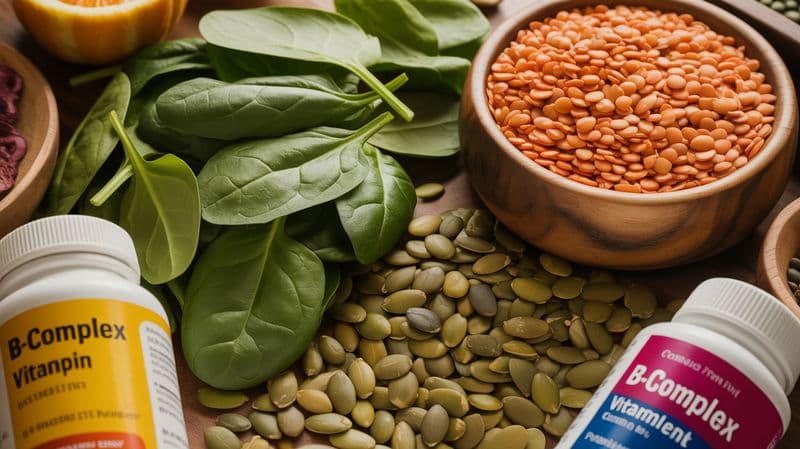
The Energy B-Vitamins
Iron deficiency often coexists with B-vitamin deficiencies, especially B12 and folate.
Vitamin B12 (Cobalamin)
Why It Matters:
- Essential for red blood cell formation
- Energy production
- Nervous system function
- Often deficient alongside iron
Signs of Deficiency:
- Same fatigue as iron deficiency
- Tingling/numbness in hands and feet
- Memory problems
- Balance issues
Testing:
- B12 level: Optimal >500 pg/mL
- MMA and homocysteine (more sensitive)
Food Sources:
- Meat, fish, poultry
- Eggs, dairy
- Fortified nutritional yeast
- Fortified plant milks
Supplementation:
- 1,000mcg daily (methylcobalamin or cyanocobalamin)
- Sublingual or oral works well
- B12 shots if severe deficiency or absorption issues
Folate (Vitamin B9)
Why It Matters:
- Red blood cell production
- DNA synthesis
- Works with B12
Food Sources:
- Leafy greens
- Legumes
- Avocado
- Asparagus
- Brussels sprouts
Supplementation:
- 400-800mcg daily
- Choose methylfolate (active form)
- Especially important in pregnancy
B-Complex for Energy
Consider full B-complex supplement:
- Supports energy metabolism
- All B vitamins work together
- Choose one with active forms:
- Methylcobalamin (B12)
- Methylfolate (B9)
- P-5-P (B6)
Lifestyle Strategies for Energy
While Rebuilding Iron Stores:
1. Prioritize Sleep
- 8-9 hours nightly (you need extra)
- Consistent schedule
- Dark, cool room
2. Gentle Movement
- Light walking
- Gentle yoga
- Swimming
- Avoid intense exercise (depletes iron further)
3. Stress Management
- Increases inflammatory cytokines
- Impairs iron absorption
- Meditation, deep breathing
4. Address Underlying Causes
- Heavy periods: talk to doctor about options
- GI issues: work with gastroenterologist
- Dietary: work with dietitian
Timeline & Expectations
Week 1-2
- Begin supplementation
- May notice slight improvement or feel worse (adjustment period)
- Side effects most common
Week 2-4
- Energy begins improving
- Less breathlessness
- Better exercise tolerance
Week 4-8
- Significant energy improvement
- Hemoglobin normalizing
- Still rebuilding stores
Week 12-16
- Re-test ferritin
- Should see 10-30 ng/mL increase
- May need continued supplementation
Month 6-12
- Ferritin fully replenished
- Transition to maintenance dosing or dietary management
Important: Don't stop supplementing once you feel better! Continue until ferritin is optimal (50-100 ng/mL).
Maintenance Strategy
After Replenishment:
For Women with Periods:
- 10-20mg daily or 30-60mg 3-4x weekly
- Re-test ferritin every 6-12 months
For Vegetarians/Vegans:
- 20-30mg daily
- Focus on vitamin C with meals
- Consider B12 supplement
For All:
- Iron-rich diet
- Monitor symptoms
- Re-test if symptoms return
When to See a Doctor
Seek medical attention if:
- Severe symptoms (extreme fatigue, chest pain, rapid heart rate)
- Ferritin <15 ng/mL or hemoglobin <10 g/dL
- Not improving after 3 months of supplementation
- Symptoms worsen despite treatment
- Signs of internal bleeding (black tarry stools, blood in stool/vomit)
Additional Testing Needed:
- Unexplained iron deficiency
- Recurrent deficiency
- Suspected GI bleeding
- Possible celiac disease or IBD
Special Populations
Athletes
- Higher iron needs (increased losses)
- Test ferritin every 3-6 months
- Maintain ferritin >50 ng/mL
- Consider iron supplementation during training
- Ensure adequate calories and protein
Pregnancy
- Need 27mg iron daily minimum
- Test at first prenatal visit and again at 28 weeks
- Critical for fetal development
- Continue through breastfeeding
Children
- Monitor growth spurts
- Picky eaters at risk
- Iron-fortified formula/cereals helpful
- Work with pediatrician on supplementation
Success Checklist
✅ Get proper testing (ferritin is key)
✅ Start iron supplementation if ferritin <50
✅ Choose iron bisglycinate for best tolerance
✅ Take with vitamin C, away from calcium/tea
✅ Eat iron-rich foods daily
✅ Address underlying causes
✅ Re-test in 12-16 weeks
✅ Continue until ferritin optimal
✅ Transition to maintenance dosing
The Bottom Line
Iron deficiency is common, under-diagnosed, and incredibly draining. But with proper testing, targeted supplementation, and dietary optimization, you can rebuild your iron stores and energy levels.
Key Takeaways:
- Know your ferritin number (not just hemoglobin)
- Supplement if <50 ng/mL (women) or <100 ng/mL (men)
- Choose iron bisglycinate for best tolerance
- Take with vitamin C, away from calcium and tea
- Be patient—full recovery takes 6-12 months
- Continue supplementation until ferritin optimal
Don't settle for exhaustion. Your energy can be restored!