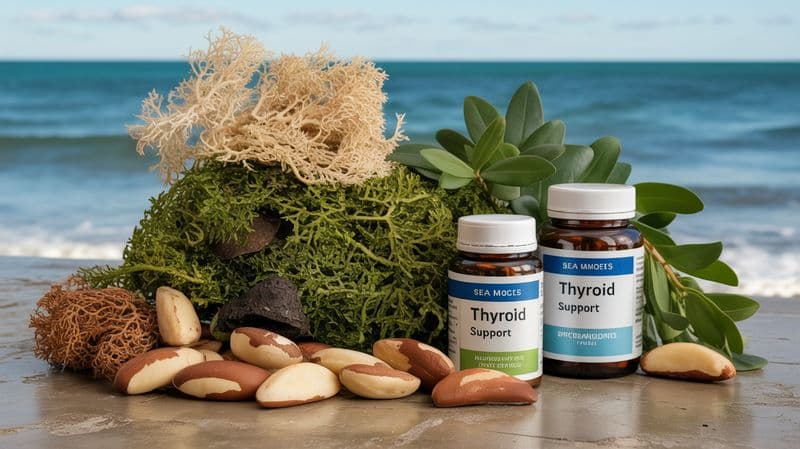
Thyroid Health: Natural Support for Hypothyroidism & Hashimoto's
Table of Contents
- Understanding Your Thyroid
- Hypothyroidism: When Your Thyroid Is Underactive
- Hashimoto's Thyroiditis: The Autoimmune Connection
- Optimal Thyroid Testing: What Your Doctor Should Order
- Natural Thyroid Support Protocol
- Medication Options: When Lifestyle Isn't Enough
- 90-Day Thyroid Reset Protocol
- Thyroid and Weight Loss: The Truth
- When to See a Doctor
- Key Takeaways
- References
Thyroid Health: Natural Support for Hypothyroidism & Hashimoto's
Your thyroid is a small, butterfly-shaped gland in your neck, but it has a massive impact on your health. It produces hormones that regulate metabolism, energy production, body temperature, heart rate, and countless other functions. When your thyroid isn't working properly, everything in your body can feel "off."
Understanding Your Thyroid
Thyroid Hormones 101
Your thyroid produces two main hormones:
T4 (Thyroxine)
T3 (Triiodothyronine)
Reverse T3 (rT3)
TSH (Thyroid Stimulating Hormone)
The Thyroid-Pituitary Feedback Loop
1. Brain (hypothalamus) releases TRH
2. Pituitary releases TSH in response
3. TSH tells thyroid to produce T4 and T3
4. When levels are sufficient, TSH production decreases
5. Cycle repeats to maintain hormonal balance
Hypothyroidism: When Your Thyroid Is Underactive
Common Symptoms:
Causes of Hypothyroidism
1. Hashimoto's Thyroiditis (Most Common)
2. Iodine Deficiency
3. Nutrient Deficiencies
4. Conversion Problems (High rT3)
5. Medication-Induced
6. Environmental Toxins
Hashimoto's Thyroiditis: The Autoimmune Connection
Hashimoto's is the leading cause of hypothyroidism in developed countries. It's an autoimmune condition where your immune system mistakenly attacks your thyroid tissue.
Hashimoto's Symptoms:
All hypothyroid symptoms PLUS:
Triggers for Hashimoto's:
- Leaky gut: 70% of immune system is in gut
- Infections: Epstein-Barr virus (EBV), Lyme, H. pylori
- Gluten sensitivity: Molecular mimicry (gluten proteins look like thyroid proteins)
- Chronic stress: Dysregulates immune system
- Toxins: Mold, heavy metals, pesticides
- Hormonal changes: Pregnancy, perimenopause
Testing for Hashimoto's:
- TPO antibodies (thyroid peroxidase): >34 IU/mL indicates Hashimoto's
- Thyroglobulin antibodies: Secondary marker
- Ultrasound: Shows thyroid inflammation and damage
Optimal Thyroid Testing: What Your Doctor Should Order
Standard thyroid testing (TSH only) misses most thyroid problems. Request a complete thyroid panel:
Essential Tests:
- TSH: Should be 0.5-2.5 μIU/mL (optimal), not just "in range"
- Free T4: Measures unbound, available T4
- Free T3: The active hormone your cells use
- Reverse T3: High levels indicate conversion problems
- TPO antibodies: Screens for Hashimoto's
- Thyroglobulin antibodies: Secondary Hashimoto's marker
Optimal Ranges (Not Just "Normal"):
Supporting Tests:
Natural Thyroid Support Protocol
1. The Thyroid-Supporting Diet
Foods to Emphasize:
Iodine-Rich Foods (if not deficient, don't overdo)
Selenium-Rich Foods
Zinc-Rich Foods
Tyrosine-Rich Foods (amino acid needed for thyroid hormones)
Cruciferous Vegetables (yes, they're fine when cooked!)
*Note: Only goitrogens when raw and in excessive amounts. Cooking deactivates goitrogenic compounds.*
Foods to Avoid or Minimize:
Gluten (Especially if Hashimoto's)
Soy (Unfermented)
Processed Foods
2. Essential Thyroid-Supporting Supplements
Iodine (Use Cautiously)
- Dosage: 150-300mcg daily for deficiency, higher doses only under supervision
- Why it works: Required for T4 and T3 production
- Caution: Too much can worsen Hashimoto's. Test first!
- Best sources: Sea moss, kelp, iodine drops
Selenium
- Dosage: 200mcg daily
- Why it works: Required for T4 to T3 conversion, reduces TPO antibodies by 40-60%
- Evidence: Multiple studies show benefit for Hashimoto's
- Food sources: 2-3 Brazil nuts daily provides sufficient selenium
Zinc
- Dosage: 15-30mg daily
- Why it works: Needed for TSH receptor function and T3 production
- Test: Many people with hypothyroidism are zinc deficient
Vitamin D3
- Dosage: 5,000-10,000 IU daily (test levels first)
- Target level: 50-80 ng/mL
- Why it works: Immune regulation, reduces autoimmune activity
Magnesium
- Dosage: 400-600mg daily
- Why it works: Required for over 300 enzymatic reactions, including thyroid hormone production
B-Complex Vitamins
- Dosage: High-potency B-complex with methylated B vitamins
- Why it works: B2, B3, B6, and B12 all support thyroid function and energy production
Iron (If Deficient)
- Dosage: 25-50mg daily (elemental iron), take with vitamin C
- Target ferritin: 70-100 ng/mL
- Why it works: Required for thyroid peroxidase enzyme
Ashwagandha
- Dosage: 300-600mg 2x daily (KSM-66 extract)
- Why it works: Adaptogen that supports thyroid function, reduces stress
- Evidence: Studies show increases in T4 and T3 levels
L-Tyrosine
- Dosage: 500-1000mg on empty stomach in morning
- Why it works: Amino acid precursor to thyroid hormones
- Best for: Mild hypothyroidism, not on thyroid medication
Omega-3 Fatty Acids
- Dosage: 2-3g daily (EPA+DHA)
- Why it works: Reduces inflammation, supports hormone production
3. Lifestyle Strategies for Thyroid Health
Stress Management
Exercise (The Right Amount)
Sleep Optimization
Toxin Avoidance
4. Healing the Gut (Critical for Hashimoto's)
70% of your immune system is in your gut. Healing leaky gut is essential for reducing autoimmune activity.
4-R Gut Healing Protocol:
Remove: Gluten, dairy, sugar, processed foods, food sensitivities
Replace: Digestive enzymes, HCl (if low stomach acid)
Reinoculate: Probiotics (25-50 billion CFU), fermented foods
Repair: L-glutamine (5g 2x daily), bone broth, collagen, zinc
Timeline: 3-6 months for significant gut healing
Medication Options: When Lifestyle Isn't Enough
Levothyroxine (Synthroid, Levoxyl)
Natural Desiccated Thyroid (Armour, Nature-Throid)
T3 Medication (Cytomel, Liothyronine)
Compounded T4/T3
Important: Work with a knowledgeable practitioner. Dosing is individual and requires monitoring.
90-Day Thyroid Reset Protocol
Phase 1: Elimination & Testing (Weeks 1-4)
- Diet: Remove gluten, dairy, soy, processed foods
- Testing: Complete thyroid panel, nutrients, antibodies
- Supplements: Start selenium (200mcg), vitamin D, magnesium
- Lifestyle: Establish sleep routine, begin stress management
Phase 2: Support & Repair (Weeks 5-8)
- Diet: Continue elimination, add gut-healing foods
- Supplements: Add ashwagandha, zinc, B-complex, omega-3s
- Gut healing: Begin 4-R protocol
- Lifestyle: Moderate exercise, continue stress management
Phase 3: Optimize & Retest (Weeks 9-12)
- Diet: Maintain clean eating, can test food reintroductions
- Supplements: Continue all supportive supplements
- Testing: Retest thyroid panel, antibodies, nutrients
- Lifestyle: Establish sustainable routine
Expected Timeline:
- Weeks 1-2: May feel worse (detox symptoms)
- Weeks 3-4: Energy starts to improve
- Weeks 6-8: Noticeable improvements in symptoms
- Weeks 10-12: Significant symptom relief, weight loss, better mood
- 3-6 months: Continued improvement, labs normalize
- 6-12 months: Maximum benefit, especially for Hashimoto's (antibodies declining)
Thyroid and Weight Loss: The Truth
Hypothyroidism makes weight loss harder, but not impossible. Here's why:
Weight Loss Strategy:
1. Optimize thyroid function first (it may take 3-6 months)
2. Don't crash diet (lowers T3 further)
3. Eat enough (1200-1500 calories is too low)
4. Focus on protein (0.8-1g per pound)
5. Strength train (builds metabolism-boosting muscle)
6. Be patient (1-2 lbs per month is realistic)
When to See a Doctor
Seek professional help if:
Key Takeaways
1. Hypothyroidism affects metabolism, energy, weight, mood, and countless other functions
2. Hashimoto's is the most common cause (autoimmune)
3. Standard testing (TSH only) misses most problems—get a full panel
4. Optimal ranges are different than "normal" ranges
5. Key nutrients: Iodine (careful!), selenium, zinc, vitamin D, iron
6. Gut health is critical for Hashimoto's—heal leaky gut
7. Gluten elimination benefits 90% of Hashimoto's patients
8. Medication may be necessary—work with knowledgeable practitioner
9. Recovery takes 3-12 months depending on severity
10. Weight loss is possible but requires patience and optimized thyroid function first
References
1. Tomer, Y., & Huber, A. (2009). The etiology of autoimmune thyroid disease. *Autoimmunity*, 42(5), 391-397.
2. Gärtner, R., et al. (2002). Selenium supplementation in patients with autoimmune thyroiditis. *The Journal of Clinical Endocrinology & Metabolism*, 87(4), 1687-1691.
3. Sharma, A. K., et al. (2018). Efficacy and safety of Ashwagandha root extract in subclinical hypothyroid patients. *The Journal of Alternative and Complementary Medicine*, 24(3), 243-248.
4. Esposito, D., et al. (2016). Iodine deficiency and thyroid regulation in healthy women. *Nutrients*, 8(2), 69.
Dr. Emily Chen
Healthcare professional and wellness expert with over 15 years of experience in natural medicine and holistic health. Passionate about empowering people to take control of their health through evidence-based natural remedies.